Sensory Room Ideas For Autism/ADHD:

Do you have a child on the autism spectrum or who struggles with ADHD?
As parents, we always want to do our best for our kids, including supporting them to ensure they have everything they need to succeed in life. One great way to do this for a kid that is neurodivergent sensory is by setting up a sensory room for them.
Setting up sensory rooms is something schools, hospitals, and community centers commonly do to help children develop, explore, and engage their different senses. These spaces benefit neurodivergent sensory kids because they can provide calm, focus, and comfort when needed.
If setting up one of these rooms sounds like something you would like to do in your home, then you're in the right place. We will be sharing sensory room ideas for autism and ADHD that are budget-friendly and equally effective.
And since so many of you do homeschooling, at-home learning, or a hybrid of in-person and at-home learning with your kids, we will tailor these tips to focus on the needs of students learning from home.
Let's jump right in.
What Is Most Important When Setting Up A Sensory Space For Schoolwork?
Consider a few key elements when setting up a sensory space in your home.

#1 - Having A Quiet Space Where Your Child Can Focus
Even though we've all experienced some funny moments attending a virtual class or meeting where someone else didn't realize your camera was on, this is not necessarily conducive to a focused learning environment.
Not only can this be distracting for your child but also the others. Now the teacher has to get the class back on track which wastes essential time.
Neurodivergent kids already have a challenging time getting focused, so putting them in an environment where the dog is running around, they can hear the t.v, or toys surround them is not the best way to help them stay focused on their school work.
If you have no choice but to set your child up in the common areas of the house to do their schoolwork, provide them with noise-canceling headphones to focus better.
#2 - Setting Up A Distraction-Free Desk
The next step is to ensure no distractions on their desk, which means having minimal stuff on their desk.
For a neurodiverse child, we should have one sensory toy like a pop-it, white paper, a writing utensil or whiteboard, and a dry-erase marker.
By keeping their workspace simple, you can help your child focus on the items they need to use and eliminates the temptation to become distracted by other things.
#3 - Minimizing The Distraction On Their Devices:
Just like you want to minimize what is on their desk, you also want to minimize what is on any devices they use for their schoolwork, including computers, tablets, etc.
You can start by removing any apps or games that are not essential for their schoolwork.
It can also be helpful to turn off any notifications and pop-ups, which can be very distracting.
#4 - Provide An Alternate Seating Option (Or Two)
For kids with sensory issues, providing them with some active seating options is a great way to keep them calm and focused on their schoolwork.
Active sitting occurs when a seat allows the chair's occupant to remain active, even while seated.
Some examples of active seating that you could add to the sensory room include bean bag chairs, an exercise ball, or a stability ball.
#5 - Remove Anything That Can Overstimulate Their Senses
Many neurodiverse kids can easily experience sensory overload due to light, smell, and noise. So, remove anything that can overstimulate their senses.
For example, you should remove harsh or flickering lights and replace them with mellow-colored ones. Also, remove any candles or plug-in-the-wall odor eliminators, as these give off powerful smells.
For more information on things that can overstimulate a neurodiverse child's senses, see the section below on items to keep out of a sensory room.
#6 - Add Things To The Room That Will Help Them Regulate
It is common for neurodiverse individuals to become overwhelmed and overstimulated, so they need strategies to help them regulate.
To do this, you can include a bin full of heavy books that they can slide around on the floor. Another idea is to have a weighted blanket in the room to crawl under when they need to relax.
For more ideas of things to include in a sensory room, see the section below on what should be in a sensory room.

What Should Be In A Sensory Room?
As I said above, it is common for neurodiverse individuals to get overwhelmed or overstimulated throughout the day. Since the goal of a sensory room is to help foster calm, focus, and comfort at any time, you want to include things that will be helpful to your child any day and any time.
Here is a list of things you can include in a sensory room to help your child.
Sensory Toys
Sensory toys were designed to stimulate one or more senses - sight, sound, touch, smell, and taste. Having these in your child's sensory room is a good idea.
Here are some sensory toys you can consider including in the space.
Sensory mats with different textures.
Pin artboards.
Bean bags.
Fidget spinners.
Bubble tubes.
Balance beam.
Ball Pit.
Weighted Blanket
Many occupational therapists recommend using weighted blankets for kids with autism spectrum disorders or ADHD because they are proven to help with calming. It truly is one of the best self-soothing methods.
So, include one of these in your sensory room that your child can use whenever needed.
Body Socks
If you've tried a weighted blanket, but your child doesn't like it, you should try a body sock. These are sack-like pieces of stretchy fabric designed to give deep pressure input. These are known to help kids feel like they are in a safe space and calm an overstimulated nervous system.
White Noise Machine
If your child is sensitive to loud sounds, loud music or even easily distracted by noises of other things in the house, they might enjoy a white noise machine.
White noise machines don't work for every child, but it is worth trying if your kid is susceptible to the noise around them.
Anything you include in your sensory room should take your child's needs into account completely. There are also certain things that you should avoid putting in a sensory room altogether.
What Shouldn't Be In A Sensory Room?
While sensory issues vary from child to child, there are some general considerations you can take when thinking about what to avoid in a sensory room.
Harsh Lighting
Many kids on the autism spectrum or have ADHD experience hypersensitivity when it comes to harsh lighting that you get from LED or fluorescent lights.
Strong Smells
Strong smells can also result in overstimulation for many kids, including the aromas of certain foods, perfumes, essential oils, and so on.
Sounds
Things like loud music, fireworks, or even too many conversations happening at once can be too much for a neurodivergent sensory child to handle.
These are just some examples that affect kids on the autism spectrum or kids with ADHD. Autism Speaks has written an article you can read here, which goes into more detail about sensory issues for people with autism. And Medical News Today has a similar piece you can read here for people with ADHD.
How To Combine A Sensory Bedroom and Workspace
If your child's bedroom and workspace are combined, you can do a few things to keep this room sensory.
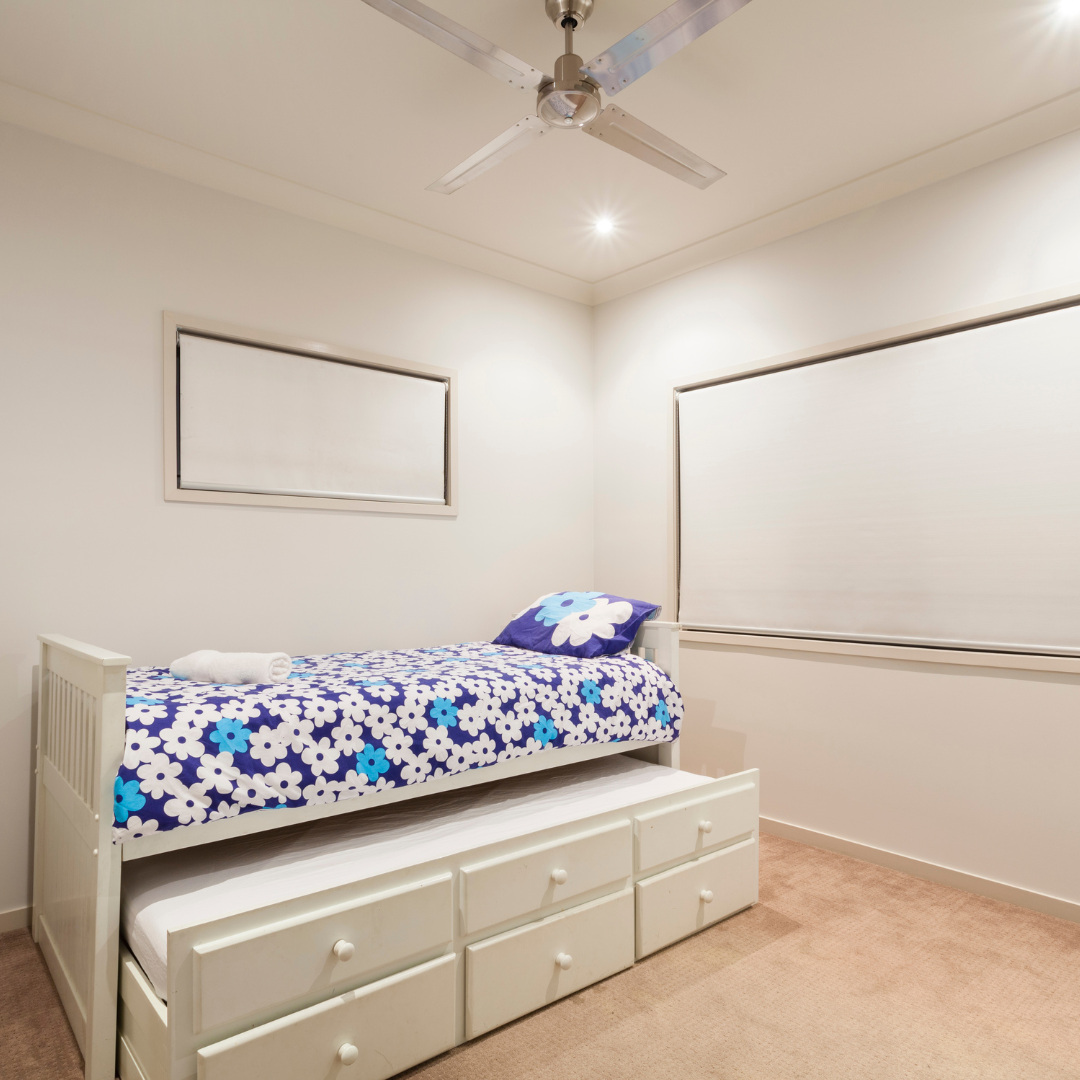
Have A Decluttered Sleeping Area
Make sure you have a decluttered sleeping area. Too many toys or options can cause thought stimulation and prevent proper sleep.
Design a safe sleeping area that feels cozy. Make sure to include pillows and blankets with the right touch sensory for your child, such as silk, cotton, fleece, etc. Choose the one best helps your child relax.
Set Up Zones
As much as you might enjoy working in bed occasionally, I think we can all agree this is not the best way to
get motivated and do our most productive work.
Well, the same goes for neurodivergent children.
Try to set up zones within the room. Have the decluttered sleeping area in one spot, a little workspace in another, and their sensory toys in another.
Keep Toys In Another Space Of Your Home
When the toys are in your child's room, becoming distracted is far too easy. Having toys in the room can also lead your child to play instead of doing schoolwork or getting a good night of sleep.
I recommend keeping play toys in another area of your home, such as a dedicated playroom, a storage cubby in your living room, etc.
If you believe having one or two of their favorite toys in the room won't distract them, let them keep them. But try not to let this get out of hand. Implementing the one-in-one-out rule is a great idea to prevent this from becoming a problem.
What Can You Do If You Don't Have Space For A Sensory Room?
If you don't have the space to make a dedicated sensory room in your home, consider setting up a sensory nook in one of the corners of your common space area. A great place to do this is in a family or dining room. You could even remove the doors off one of the closets to make a sensory nook for your child.
Try to choose one of the more quiet areas of the home so that this can be the safe space your child needs.
Now you have all the information you need to create a practical sensory room for your child.
Of course, if you have any questions about this, please do not hesitate to contact us by using the contact form below.
Enjoy setting up your sensory room in your home!