What to look for in a Microschool. Four vital components to guide you!
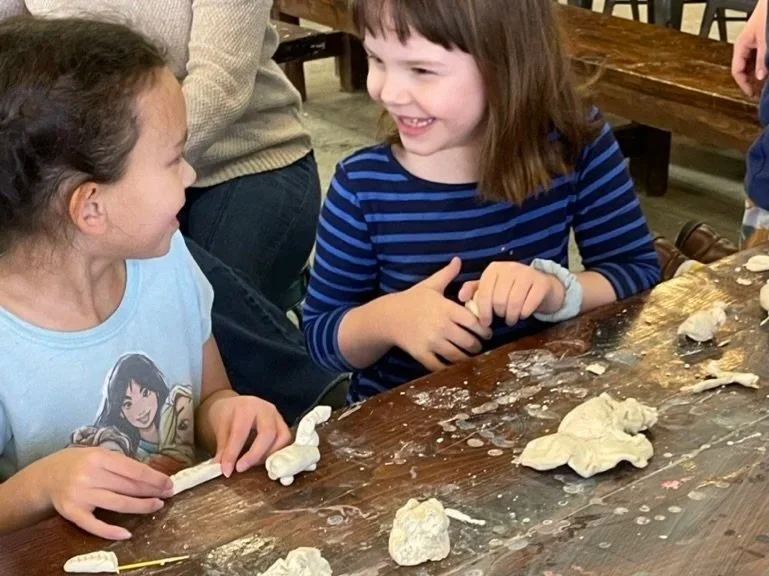
Two Microschool students learning with clay.
Choosing the right educational environment for your child is one of the most significant decisions a parent can make. In recent years, microschools have emerged as a compelling alternative to traditional schooling, offering personalized learning experiences in smaller, more intimate settings. But with so many options available, how do you determine which microschool is the best fit for your family? Here’s a comprehensive guide to help you navigate this important choice.
Does it fit your child’s learning style?
Every child is unique, possessing distinct learning preferences and needs.
A Microschool's primary advantage lies in its ability to cater to these individual differences. Before committing, consider the following:
Is your child an active or a passive learner? Some children thrive in environments that encourage hands-on exploration and dynamic engagement, while others prefer to absorb information through observation and structured instruction. A microschool should align with your child's natural inclination towards learning.
Are they a kinesthetic, hands-on learner? For children who learn best by doing, a microschool that integrates experiential learning, projects, and practical application of knowledge will be far more effective than one focused solely on textbook learning.
Are they a book learner? Conversely, if your child is a voracious reader who excels with independent study and traditional academic resources, ensure the microschool provides ample access to books, research materials, and opportunities for deep dives into subjects of interest.
Are they social, introvert, or extrovert? The social dynamics of a microschool are crucial. An extroverted child might thrive in a collaborative setting with frequent group activities, while an introverted child might prefer more independent work with opportunities for focused, one-on-one interaction with educators. Consider if the small group size fosters positive peer relationships without being overwhelming.
Do they need a quiet space or even a space to get away to when they feel overwhelmed? Children, especially those who are highly sensitive or easily overstimulated, benefit from designated quiet areas or "calm down" corners. A well-designed microschool environment will recognize and accommodate these needs, providing a sanctuary for children to regulate their emotions and refocus.
2. Does the Microschool fit your family’s schedule?
Beyond the academic fit, a microschool must seamlessly integrate into your family's lifestyle.
The flexibility offered by many microschools is a key draw, but it's important to clarify how that flexibility aligns with your family's specific rhythms and goals.
Some families want to travel often, and that is part of their child’s learning curriculum. For nomadic or travel-loving families, a microschool with a flexible attendance policy or a robust remote learning component can be invaluable. The ability to experience real-world learning – interacting with nature, history, and science in everyday life – while maintaining educational continuity is a significant benefit. In such cases, inquire about how the microschool supports learning on the go and integrates these experiences into the child's academic progress.
Some families take an active role in their child’s education and only want their child to attend a microschool one or two days a week. This hybrid approach is gaining popularity, allowing parents to be deeply involved in their child's learning journey. If this is your family's preference, confirm the microschool's part-time options, ensuring that the limited attendance still provides a comprehensive and meaningful educational experience. This leads to an important item that most parents often overlook…
3. Does the Microschool provide you with a family curriculum?
This is a critical, yet frequently overlooked, aspect of microschool selection, especially for families seeking a hybrid or deeply integrated learning experience.
Family curriculum is the curriculum you work on together at home. A truly supportive microschool recognizes the importance of the home learning environment. Does it offer a structured, yet flexible, curriculum that extends beyond the classroom? This might include guidance for at-home projects, suggested readings, or activities that reinforce concepts learned in school.
Do you have to invest in books and printouts and online sources just to be part of your child’s education? For many families, the cost and effort of sourcing additional educational materials can be a significant burden. An ideal microschool minimizes this by providing a comprehensive "family curriculum" that includes all necessary resources.
An example of a place that provides this is Infinite Learning Academy. Infinite Learning Academy exemplifies this approach. They provide you with a weekly bespoke curriculum that is created for your child as they grow and develop. This personalized, adaptable curriculum ensures that the learning at home is a natural extension of the learning at the microschool, tailored to your child's evolving needs and interests.
This not only saves money for the family, but all of the resources are in one place. Consolidating educational resources eliminates the need for parents to spend countless hours researching and purchasing materials, reducing financial strain and simplifying the educational process. This integrated approach ensures consistency and quality across all learning environments.
4. Does the Microschool help with record keeping?
Navigating educational regulations and documenting your child's progress can be complex, particularly for families opting for non-traditional schooling.
A valuable microschool will offer support in this area.
Many states require a portfolio or some form of documentation. Understanding your state's homeschooling or microschooling requirements is crucial. Inquire whether the microschool assists with compiling portfolios, maintaining attendance records, or fulfilling any other necessary documentation mandates.
How do you know what “grade” your child is earning? While microschools often focus on mastery rather than traditional grading, it's important to have clear benchmarks of your child's progress. Ask how the microschool assesses learning, communicates achievements, and provides insights into your child's academic standing.
Is your child mastering the skills they need to for their developmental needs? Beyond grades, the true measure of success lies in your child's skill development. A good microschool will provide regular, detailed feedback on your child's progress in key developmental areas, ensuring they are acquiring the necessary competencies for their age and stage.
The good news is that if you already have a microschool you love, they can partner with places such as Infinite Learning Academy to help you with record keeping and family curriculum! This collaborative model allows microschools to leverage external expertise, providing families with comprehensive support without having to overhaul their existing educational environment. This partnership can bridge gaps in services, ensuring that every aspect of your child's learning journey is well-supported and documented.